






2026/5/25 15:30:55
As a type of non-traditional trademark with a high number of applications, the examination standards for three-dimensional logo trademarks have been continuously adjusted in recent years, and the difficulty of registration has also changed accordingly. This article will comprehensively break down the examination logic and practical points of three-dimensional logo trademarks from four dimensions: introduction, formal examination, substantive examination, and exercise of rights, providing reference for practitioners and applicants.
1、 Three dimensional logo trademark: definition and expression form
Article 8 of the Trademark Law explicitly lists three-dimensional logos as elements of trademark applications, which can be applied for separately or in combination with other elements. According to the Guidelines for Trademark Examination and Adjudication, a three-dimensional logo trademark refers to a trademark consisting only of three-dimensional logos or a combination of three-dimensional logos containing other elements, mainly manifested in three categories:
The three-dimensional shape of the product itself, such as the overall design of a car, directly reflects the three-dimensional characteristics of the product itself;
The three-dimensional shape of product packaging or containers: typical representatives include the classic packaging of Ferrero Rocher chocolate and the bottle shape of Head&Shoulders shampoo, which are closely related to the product carrier;
Other three-dimensional signs: mainly consisting of independent three-dimensional shapes such as cartoon characters and dolls, which have a relatively high success rate in registration in practice.
From the perspective of registration difficulty, the first two types of 3D signs have significantly higher registration difficulty than the third type due to their easy access to absolute rejection reasons such as "lack of distinctiveness" and "functionality". If there is only a significant issue, it can be proven to be significant by submitting a large amount of evidence; But once it involves functional review, even with sufficient evidence, it is difficult to overcome.
2、 Formal review: a key link in building a solid foundation for application
Formal examination is the "first hurdle" in the application for a three-dimensional trademark, centered around the requirements of the Implementing Regulations of the Trademark Law, to verify the compliance of the application documents. Common issues focus on the following four aspects:
01 Application Statement and Instructions for Use
When applying, it is necessary to check the box "Apply for trademark registration with 3D logo" in the designated position of the application form to make a declaration, clearly indicating the specific location where the trademark is used on the goods (such as packaging, containers, etc.). If it involves specified colors, the specific color number should be indicated. For Madrid territorial extension applications, the applicant must submit the above formal requirements through a Chinese agency within three months from the date of registration with the International Bureau. In practice, many foreign applicants neglect this requirement and need to submit supplementary materials through reexamination after rejection.
02 Core requirements for 3D graphics
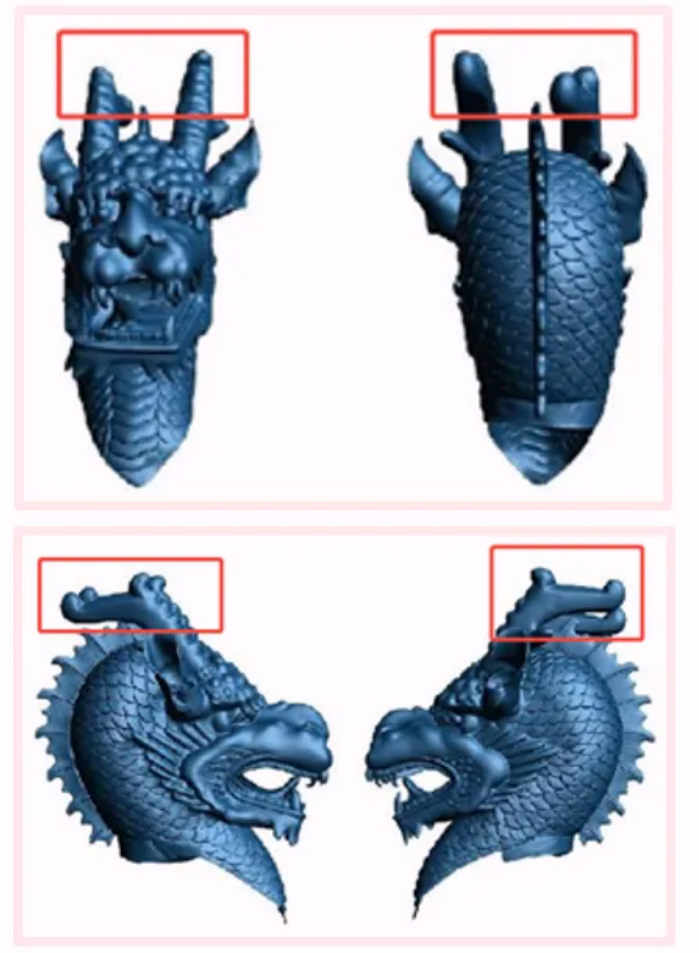
The design must meet the principle of "clear and distinguishable, unique shape", and include at least three side views (three to six sides can be submitted), with consistent details in each view and no contradictions or inconsistencies. This is a high-risk area for correction and rejection in recent years, with typical issues including:
Unclear standard: When combining three-dimensional shapes with flat elements such as text and patterns, if the text (especially the English logo) becomes blurry due to its small size, it is necessary to optimize the clarity while maintaining the same proportion to avoid the risk of correction;
View contradiction/missing: For example, the front and back views of a certain three-dimensional logo display edges that are one high and one low, but the distinction between the high and low edges in the left and right views is not clear, resulting in the inability to determine a unique three-dimensional shape; Cube packaging only requires submission of five side views, and missing key side views will also be deemed non compliant;
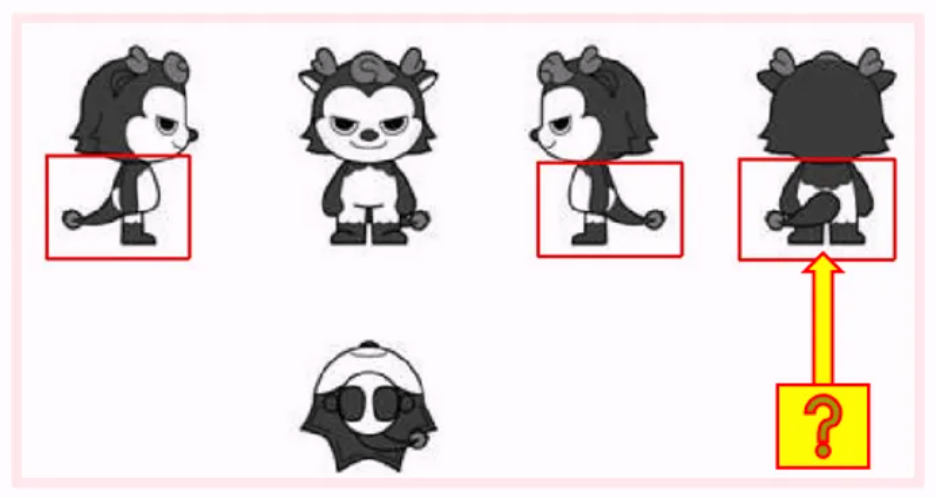
Details do not correspond: The left and right views of the cartoon image show a seamless connection between the tail and the body, while the back view shows the tail protruding separately and offset in direction, which directly affects the effectiveness of the pattern.
03 Naming conventions for power of attorney
The power of attorney should clearly indicate specific names such as "XX three-dimensional trademark" and "XX graphic three-dimensional trademark". Writing only the four characters "three-dimensional logo" is an non-standard expression and may trigger a correction notice.
04 Form review optimization suggestions
Before applying, standardized drawing methods should be used to indicate key dimensions and angles; For complex shapes, it is recommended to obtain accurate patterns through physical modeling and multi angle scanning; Cross check the details of each view before submission to ensure that the perspective, scale, and structure are completely consistent.
3、 Substantive examination: the core dimension that determines the success or failure of registration
The substantive examination revolves around four dimensions: prohibited clauses, distinctiveness, functionality, and similarity. Among them, distinctiveness and functionality examination are the key and difficult points in practice.
01 Review of Prohibited Terms: Absolute Rights Obstacles
Three dimensional signs that violate Article 10 of the Trademark Law will be directly rejected, and typical situations include:
Adverse effects: Skull and eyeball designs have been identified as having adverse effects due to violating public order and good customs; Designs similar to religious images such as Maitreya Buddha can easily hurt religious emotions;
Risk of misidentification: The shape of the bottle containing the words "Daqu" can easily lead to public misidentification of the raw materials used in the wine; The application design contains an unregistered "?" symbol, which can mislead consumers into thinking that it is a registered trademark;
Place name ban: Signs containing administrative division place names at or above the county level, if no other significant features are formed, will trigger place name ban clauses.
02 Significant Examination: The Core Identification Value of a Trademark
The significance judgment of three-dimensional logos requires comprehensive consideration of four factors: logo composition, product relevance, public awareness, and usage methods. The core logic is whether the source of the product can be distinguished. There are significant differences in product correlation in practice:
High correlation=lack of significance: The shape of elephant dolls in toys, keychains, and other products is considered to lack significance due to being a commonly used shape in the industry; The clock design application on clock products and the chocolate design application on chocolate products were both rejected due to their strong association with the products themselves;
Low relevance=significant: The same elephant doll design is recognized as recognizable in terms of tires, clothing, and advertising services because it is not directly related to the product/service; Penguin modeling is allowed to register in Internet search service and sculpture modeling in banquet service due to weak relevance.
The significance judgment of the combination symbol of "three-dimensional shape+planar element" needs to be discussed in different situations:
Double significant element combination: such as unique bottle shape+prominent text, overall significant;
Single significant element combination: Significant three-dimensional shape+ordinary planar element, still significant as a whole; Ordinary three-dimensional shape+prominent planar elements. If the planar elements are clear and in moderate proportion, the overall recognition can be significant, but the exclusive rights of the three-dimensional shape part must be voluntarily waived, and the rights of that part cannot be claimed separately;
Invalid situation of elements: If the size of the planar elements is too small, the position is concealed (such as tiny text on a fine wine bottle), or if the overall combination is recognized as packaging decoration rather than a trademark, it will still be deemed lacking distinctiveness.
Special attention should be paid to the fact that originality ≠ distinctiveness. Although the design of a certain chair is unique and highly artistic, it is still deemed by the court to lack inherent distinctiveness due to its inherent shape as a commodity, and distinctiveness needs to be proven through actual use.
03 Use to achieve significance: high visibility is the core support
When the logo lacks inherent significance, it is necessary to submit a large amount of evidence to prove that it forms a stable correspondence with the applicant. Evidence must meet the requirements of "long duration, wide scope, and large scale", including sales receipts, media reports, advertising expense vouchers, etc., and must clearly cover designated goods.
In typical cases, Ferrero's eggshell shaped chocolate packaging and the unique bottle design of the Baishui Mountain were both approved for registration by submitting long-term national evidence of their high popularity on specific products. However, it should be noted that the significance obtained from use is limited to the actual product used, and similar products (such as chocolate and sweets) cannot naturally extend to protection.
04 Functional Review: Unrestrictable Registration Restricted Area
Article 12 of the Trademark Law clearly stipulates that three types of three-dimensional signs cannot be registered and cannot be overcome through use, which is a stricter threshold than distinctiveness examination:
The shape generated by the nature of the product itself: the circular shape of the tire, the shape of the screwdriver blade, are all necessary forms to achieve the function of the product;
The shape required to achieve technical results: the multi blade curved design of the shaver enhances shaving effectiveness by fitting snugly to the face; The dual window layout of the detection reagent is a necessary structure for achieving the detection function;
Shapes with substantial value: the shape of exquisite porcelain vases, the body design of Ferrari sports cars, whose aesthetic value directly determines the core value of the product and affects consumer purchasing decisions.
Functional logos can be protected through design patents (technical functionality) or copyrights (aesthetic functionality), but their trademark attributes are difficult to establish due to the lack of non functional features.
05 Similarity Review: Multidimensional Comparison Principle
The similar approximation judgment of 3D logos covers three situations: similar shapes between 3D logos (such as two similar cartoon doll shapes); Three dimensional logos are similar to flat graphics (such as three-dimensional car shapes that are similar to flat car patterns); In the combination of three-dimensional shapes and planar features, the approximation of core salient elements (such as text) constitutes the overall approximation. If the three-dimensional shapes in the combination logo lack distinctiveness, the planar elements will be used as the core basis for approximate judgment.
4、 Exercise of Rights: Boundaries and Protection after Registration
After the three-dimensional logo trademark is approved for registration, the exercise of rights should pay attention to the limitations of Article 59 of the Trademark Law: if the logo contains the shape of the nature, technical effect, or substantive value of the goods themselves, the trademark owner has no right to prohibit others from using it legitimately, and such shapes belong to the scope of public resources.
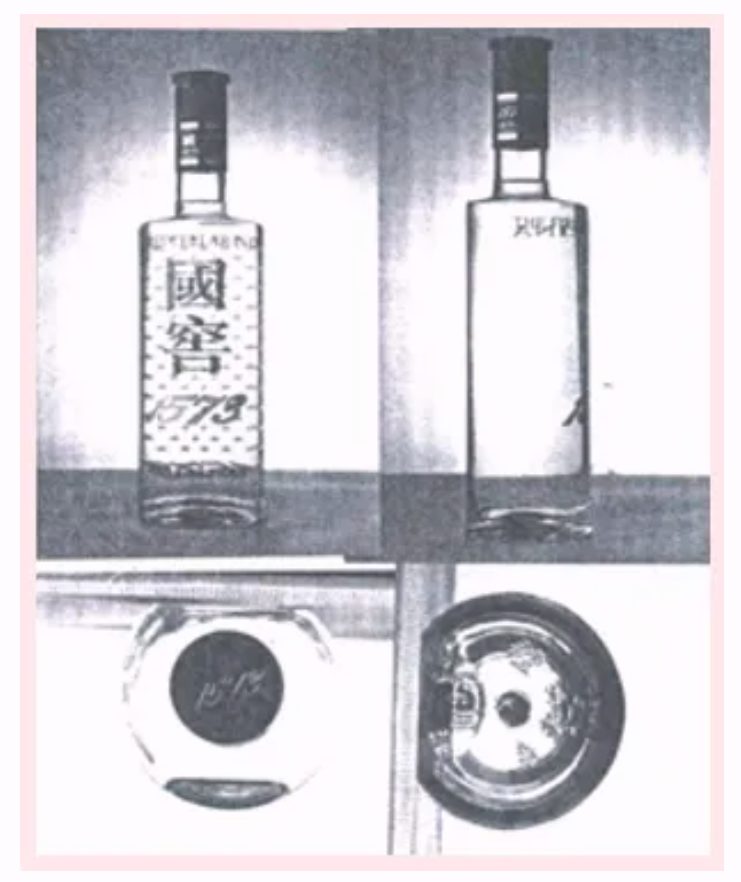
In the determination of infringement, the court pays more attention to the overall recognition and popularity of the logo. In the Guojiao 1573 three-dimensional trademark infringement case, although the accused product had different text labels, its three-dimensional features such as transparent bottle body and red gold color matching were highly similar to the involved trademark. Combined with the plaintiff's high popularity, it was ultimately determined to constitute infringement.
In the Martell XO bottle trademark case, the unique bottle shape has formed a stable market recognition due to long-term use. Even if the infringing product uses its own written trademark, it is still judged as infringing due to the similarity of the bottle body.
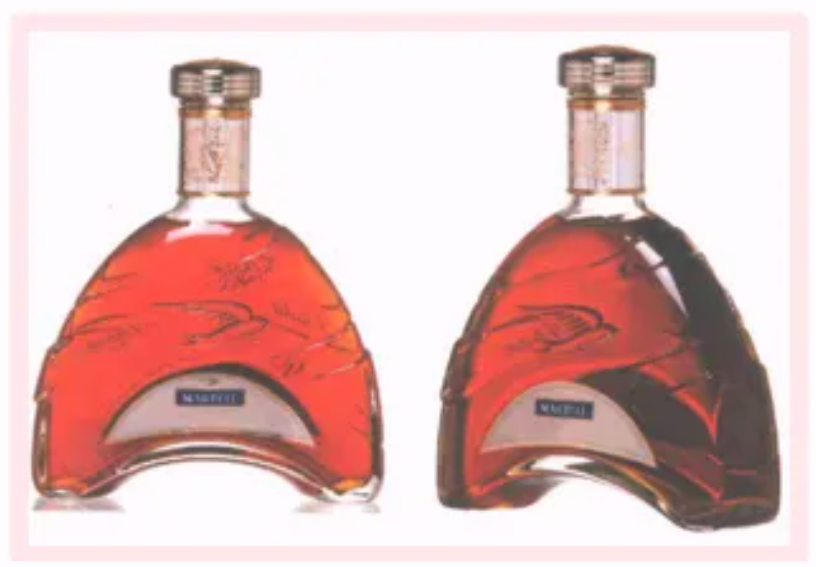
This suggests that the rights holder needs to enhance the recognizability of the 3D logo through continuous use, and at the same time, focus on proving the significance and popularity of the logo in their rights protection to support the infringement claim.
5、 Practical core suggestions for 3D logo application
Based on the recent trend of examination, there are three core points that need to be grasped in the application of three-dimensional logo trademarks:
One is to ensure that the drawings are clear, the views are complete, the details correspond without contradictions, and the documents are standardized in form, reducing the risk of correction from the source;
Secondly, in substantive examination, functional traps should be avoided, and priority should be given to three-dimensional shapes with low relevance to the product. If it involves product packaging/self shape, evidence should be accumulated in advance for layout and use;
The third is to clarify the protection boundaries in the exercise of rights, and to strengthen the unique correspondence between the symbol and the subject through continuous use.
With the improvement of the non-traditional trademark examination system, the registration logic of three-dimensional logos has become more rigorous. Professional pre planning and solid evidence preparation will become the key to improving the success rate of registration.
