






2025/12/10 15:22:23
The circulation and transformation of second-hand goods in the current market are becoming increasingly active, with a large number of non original goods that have been repaired, refurbished, or functionally upgraded entering the consumer market. The transformed products meet the diversified needs of the market, but also frequently trigger trademark infringement disputes. This article aims to explore the trademark infringement risks associated with product modification, in order to provide reference for businesses engaged in such behavior.

The application boundary of the principle of exhaustion of trademark rights
Generally speaking, after the trademark owner or authorized trademark user legally places the goods with the trademark on the market, they have no right to prohibit or hinder others from further selling, using, and other activities of the goods in the market. This is known as the principle of "exhaustion of trademark rights".
The purpose of this principle is to promote the free circulation of goods while ensuring the protection of trademark exclusive rights. In practice, when accused of trademark infringement, product reformers often invoke the principle of exhaustion of trademark rights as a defense basis. Whether its defense can receive legal support depends on whether the transformation behavior meets the condition of exhaustion of trademark rights.
At present, China's Trademark Law does not explicitly and directly stipulate the principle of exhaustion of trademark rights, but this principle has been recognized and applied to a certain extent in previous judicial practices. According to the prevailing view, "exhaustion" does not mean the extinction of the exclusive right to use a trademark itself, but rather the exhaustion of the trademark owner's control over a specific product that has already been put into the market. Essentially, it is a reasonable restriction of trademark rights by commodity property rights, to prevent trademark owners from abusing their rights and affecting the normal circulation of goods.
The exhaustion of trademark rights defense usually requires the following three conditions to be met:
Firstly, the source of the goods is legal, which means that the goods must be first put on the market by the trademark owner or authorized licensee.
Secondly, without substantially changing the status of the goods, that is, legally sold goods cannot be modified, repackaged, repackaged, or damaged during secondary circulation.
Thirdly, the trademark function has not been compromised, that is, the core functions of identifying the source and ensuring quality of the trademark must not be damaged.
The general view is that the application of the principle of exhaustion of rights is relatively strict and plays an important role in safeguarding the interests of trademark owners.
With the popularization of the circular economy concept, green business models such as the renovation of waste materials and the resale of idle goods have become important formats. The lack of clear legal provisions to regulate the principle of exhaustion of trademark rights poses high legal risks for practitioners of second-hand transactions and transformation services of goods.
Classification of commodity transformation and its trademark infringement risk
According to the different purposes of product transformation, it can be divided into three types: non-commercial transformation, commercial transformation, and commercial transformation services. The methods of renovation include refurbishment, repackaging, changing trademarks, and combining. The purpose and method of modifying goods vary, and the risk of trademark infringement also varies.
(1) Non-commercial renovation
In the field of trademark law, the act of modifying goods for personal use purposes generally does not constitute trademark infringement.
This conclusion stems from the principle of priority of property rights and the principle of exhaustion of trademark rights derived from this principle. Specifically, the priority effect of property rights is reflected in the fact that the owner's right to dispose of legally acquired goods has a legal effect against trademark rights to a certain extent.
From the perspective of institutional value, trademark rights are essentially legal tools for maintaining market order and preventing consumer confusion. For transformation activities that do not involve commercial use, trademark rights should not excessively intervene in the exercise of private property rights. According to the rules for the disposal of circulating goods established in the Property Rights section of the Civil Code, when a commodity enters the circulation stage through legal transactions, the buyer acquires complete property rights, and their legal rights to possess, use, benefit from, and dispose of it should take priority over the exclusive rights of the trademark owner.
Therefore, the legal validity boundary of trademark rights should be limited to commercial use scenarios, and non-commercial disposal actions implemented by property owners based on the principle of private autonomy (such as changing the appearance, structure, and function of goods, changing or removing trademarks, or dismantling, restructuring, or discarding goods) belong to the scope of free exercise of civil rights. Since the consumers of the modified goods are the owners themselves, this modification does not encroach on the market of the trademark owner and usually does not cause confusion for other consumers, therefore it does not infringe on the registered trademark rights of the goods.
It should be noted that the application of the aforementioned private autonomy must be strictly limited to non-commercial self use scenarios. If the property owner's modification and use of the goods exceed the scope of private use, whether through resale, gift, or other forms to bring the modified goods back into circulation, it may trigger legal risks of trademark infringement.
(2) Commercial transformation
Commercial transformation refers to the act of a merchant transforming a product for the purpose of sales and selling it to the outside world. In the context of commercial transformation, the legal nature of the transformation behavior undergoes a fundamental change, and businesses cannot solely rely on the priority of property rights to resist trademark rights.
Merchants who legally obtain goods do indeed have property rights over the goods, but the exercise of such property rights must comply with the principle of prohibiting abuse of rights in Article 132 of the Civil Code and must not harm the legitimate rights and interests of others. When a merchant modifies the original product for the purpose of sales, the modification behavior may substantially change the quality or function of the product. When the modified product is put into the market, it severs the corresponding relationship between the trademark and the product quality, hinders the source identification and quality assurance functions of the trademark, and thus may constitute trademark infringement.
It should be pointed out that although commercial transformation can easily cause trademark infringement, it does not necessarily mean that commercial transformation will lead to trademark infringement. Whether it constitutes infringement or not, it is necessary to determine whether the transformation behavior meets the elements of trademark infringement.
Below is an analysis of the trademark infringement risks associated with several types of commercial transformation activities.
1. Commercial renovation activities
Commercial refurbishment refers to the act of repairing or upgrading damaged or aged goods, partially or completely restoring their appearance, performance, or functionality, or surpassing their original state, and then selling the refurbished goods. According to the degree of renovation, we can divide renovation into repair based renovation and reconstruction based renovation, both of which face completely different risks of trademark infringement.
Repair based refurbishment of old objects refers to the technical act of partially or completely restoring the original use of an item by replacing worn parts or repairing damaged functions. Its core feature is to follow the initial design and functional framework of the product, while maintaining the integrity of the product's original appearance, physical structure, and trademark identification for maintenance operations. Repair activities usually do not involve changes to the core structure of the product, nor do they add new trademark logos or alter their distinctive features. Therefore, consumers' identification of the source of the goods will not have a substantial impact, and generally do not have infringement risks under the framework of trademark law. Due to the fact that repair based refurbishment of old items does not result in substantial changes to the product and does not affect consumers' choices of the product or their understanding of its source, when the repairman is accused of trademark infringement, the principle of exhaustion of trademark rights can be used as a defense. However, it should be pointed out that although the repair style refurbishment of old items does not infringe on the trademark rights of others, the repaired products are not original. When selling, it is necessary to clearly label the product status, such as "second-hand" or "repaired product", or explain the fact of the repair to consumers to avoid consumers mistaking it for the original product. If relevant information is not disclosed truthfully, it may infringe on consumers' right to know and constitute consumer fraud.
Remanufacturing of old goods involves substantial adjustments to the structure, function, or appearance of the goods, which go beyond the scope of maintaining the original state of the goods and often change the essential attributes of the goods, resulting in changes in the quality, parameters, specifications, functions, and other elements of the goods. For example, core component replacement, functional upgrade and renovation, appearance reconstruction, etc. For the act of renovating old items through reconstruction, as the goods have undergone substantial changes, although the refurbished goods are still related to the original goods on the material carrier, the refurbished goods have actually lost their original attributes and may be considered as brand new products, thus having a high risk of trademark infringement. For example, in the case of (2021) Xin 40 Zhi Min Chu No. 12, the defendant refurbished the "OPPO" phone using non original shells, packaging boxes, warranty cards, accessories, etc., and still sold it under the name of "OPPO" phone, which was found by the court to have infringed the plaintiff's registered trademark exclusive rights.

2. Commercial packaging behavior
Commercial packaging refers to the act of disassembling large capacity or large packaged genuine goods and repackaging them into small-sized products for sale. The market economy encourages free trade, and operators sometimes repackage and sell large packaged products for the convenience of sales or to increase profits, in order to flexibly meet the needs of consumers. Therefore, repackaging sales behavior is not uncommon in market economy activities. Although the packaged goods themselves come from genuine products, this behavior destroys the original state of the goods and is prone to trademark disputes.

For example, in the civil judgment (2024) Su 0505 Min Chu 2974, the defendant divided 18L latex paint products into 2L sizes for sale. The court held that latex paint products require high storage conditions, and dividing the products would have a certain impact on product quality, damage the quality assurance function of the trademark involved in the case, and thus reduce the recognition and trust of the relevant public for the product. This would to some extent affect the plaintiff's brand reputation and damage the reputation bearing function of the trademark, thus constituting trademark infringement.
For example, in the civil judgment (2021) Hu 73 Min Zhong 596, the defendant Zou divided large cans of genuine "Krupp" lubricating oil into small cans and attached a self-made counterfeit "Krupp" trademark logo. The court believes that although the goods are sourced from genuine products, the cleanliness and quality of the lubricating oil cannot be guaranteed after packaging (such as impurities mixed in due to non vacuum packaging environment), which damages the quality assurance function of the trademark. Therefore, it does not belong to fair use and constitutes infringement. In the civil judgment (2014) Huai Zhong Zhi Min Chu Zi No. 0007, a trading company in Nanjing divided the "Zhonghua Brand" genuine pencil into 4 packs and labeled the "Zhonghua Brand" trademark and supplier information on the hang tag. The court believes that the use of the packaged trademark is only used to objectively indicate the source of the goods, does not change the trademark recognition function, and the pencil itself marks the producer information, which will not cause confusion for consumers. This packaging behavior conforms to commercial practices, is indicative of reasonable use, and does not constitute infringement.
The above cases illustrate that whether packaging behavior affects product quality is an important basis for courts to make judgments on infringement. At a deeper level, this standard is a response to the basic functions of trademarks. The essence of trademark rights lies in protecting the identification and quality functions of trademarks, ensuring that consumers can accurately identify the source of goods through trademarks, and have reasonable trust in the quality of goods.
However, the essence of packaging behavior is to strip the goods from their original packaging and repackage them into smaller sizes, which inevitably changes the original state of the goods. When the packaging behavior leads to a decline in product quality, the quality assurance function of the trademark is destroyed, and consumers' trust in the brand is also damaged, resulting in the infringement of trademark rights. But if the packaging behavior does not change the quality of the goods or the recognition function of the trademark, then the protection scope of the trademark cannot be infinitely expanded, which will suppress the diversified demand in the market.
3. Commercial trademark changes
Commercial trademark change refers to the act of the legal owner of a product replacing the registered trademark without authorization and then putting the product on the market. The act of changing a trademark can usually be divided into two types: one is to cover or remove the original trademark and replace it with another trademark for sale, and the other is to cover or remove the original trademark and sell it as "white label" goods.
According to Article 57, Paragraph 5 of the Trademark Law, if a registered trademark is changed without the consent of the trademark registrant and the goods with the changed trademark are put back on the market, it violates the exclusive right to use the registered trademark. This behavior is called reverse counterfeiting. The act of reverse counterfeiting registered trademarks severs the connection between trademarks and goods, depriving trademark owners of the opportunity to accumulate goodwill through the circulation of goods. Therefore, regardless of the type of reverse counterfeiting trademark behavior, it belongs to trademark infringement.
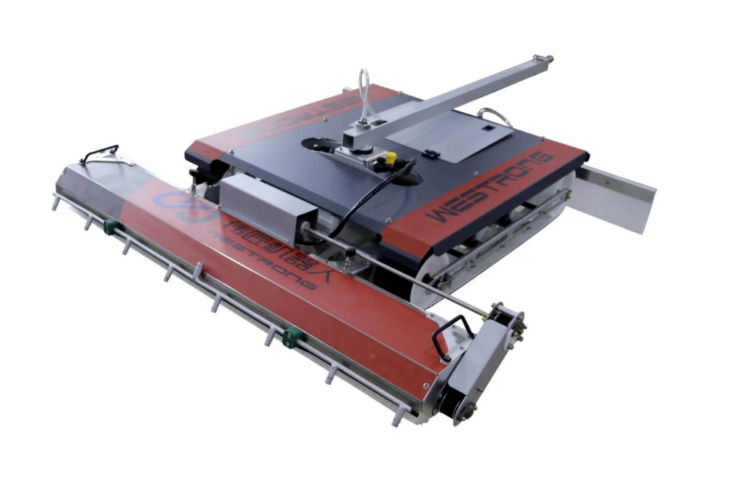
For example, in the trademark infringement case of (2023) Hu 0115 Min Chu 65439, the defendant removed the roller brush, scraper, and all "Weijiang/WESTRONG" trademark marks from the genuine photovoltaic cleaning robot, displayed it in their own name on exhibitions and promotional brochures, and used it for the promotion of their testing services, which was determined by the court to constitute reverse counterfeit trademark infringement.
4. Commercial combination behavior
Commercial combination refers to the act of rearranging and combining multiple independent products to form a product set or new product, and then selling it. The combination of products may include products from the same brand or products from different brands. Commercial combinations are usually aimed at improving sales convenience or meeting diverse consumer needs, and their most common forms are bundled sales, gift sets, etc.

Under the framework of trademark law, whether a commercial combination constitutes infringement depends on whether the trademark use of the combined goods complies with the principle of "indicative fair use". The "indicative fair use" of a trademark refers to the goodwill and reasonable use of another person's registered trademark by an operator in commercial activities, in order to objectively explain the source, purpose, and inherent characteristics of their own goods, without causing harm to the legitimate rights and interests of the trademark owner. Although there is no explicit legal provision for this principle, in practice, it is widely accepted by courts as a defense against fair use of trademarks.
(3) Commercial renovation services
Commercial renovation services refer to the behavior of businesses providing renovation services to the owners of goods based on their needs, with the aim of earning service fees. Commercial renovation services are a new service format derived from commodity maintenance services. Common repair businesses provide renovation services for clothing, bags, cars, appliances, electronic products, and other similar items. This service can meet the personalized needs of consumers for goods and achieve the recycling of waste products, so its existence has certain positive significance. However, the risk of trademark infringement is relatively high for this type of transformation behavior.
Commercial transformation services integrate different goods or components into composite goods with new functions or performance through technological means. Such transformation services often involve dismantling, transforming, or upgrading the core components of the original goods, which may break through the functional boundaries and quality standards of the original goods. If the original trademark continues to be used, it may undermine the quality assurance function of the trademark and constitute infringement of trademark rights.
For example, in a criminal case handled by the Changning District Prosecutor's Office in Shanghai in 2023, the defendant asked customers to provide genuine luxury brand old leather bags. By dismantling the bags, cutting the original leather, adding counterfeit hardware, and other methods, they transformed them into new leather bags for sale, and charged a fee for the modification service. Eventually, they were found guilty of counterfeiting registered trademarks.
(See) https://www.thepaper.cn/newsDetail_forward_27182022 )
Coincidentally, in 2024, the Seoul High Court of South Korea (2023-11283) also determined that a company's act of accepting a client's commission to dismantle second-hand luxury leather bags and using their fabrics, metal components, and other raw materials to redesign and make new bags was a trademark infringement.
However, not all commercial transformation activities will infringe on trademark rights. If the merchant providing commercial transformation services only uses branded goods as raw materials to produce new goods, and the new goods do not bear the trademark of the original goods, nor do they attach other existing registered trademarks, then the transformation behavior does not infringe on trademark rights.
Three concluding remarks
In a market economy environment, trademarks are an important means to ensure the quality of goods, maintain the reputation of merchants, and maintain commercial competitiveness. Consumers' transformation and utilization of legally sold goods is also a necessary part of practicing the concept of green development. In view of this, the trademark system needs to maintain the goodwill value accumulated by trademark owners through product quality control, while also reserving development space for emerging formats such as second-hand circulation and green transformation.
This article analyzes the legal risks of trademark infringement in different product transformation behaviors by deconstructing the application boundaries of the principle of exhaustion of trademark rights. The author believes that non-commercial renovation activities have a high degree of freedom and usually do not carry the risk of trademark infringement. However, whether commercial renovation activities or commercial renovation services infringe trademark rights depends on whether the renovation activities sever the connection between goods and trademarks and whether they cause confusion for consumers. Therefore, businesses engaged in the transformation or circulation of second-hand goods need to strictly abide by the legal bottom line and engage in relevant business with caution.
