






2026/7/22 14:14:31
July
1. Congratulations to Our Clients on Being Shortlisted for the 26th China Patent Award
Recently, the CNIPA announced the pre-award projects for the 26th China Patent Award. Co-hosted by CNIPA and WIPO, the China Patent Award is the highest official honor in China's patent field and the only government award dedicated to granted inventions and creations. We are proud to share that six patents represented by Sanyou have been selected as pre-award projects.
Pre-award projects for China Patent Silver Award

Pre-award projects for China Patent Excellence Award
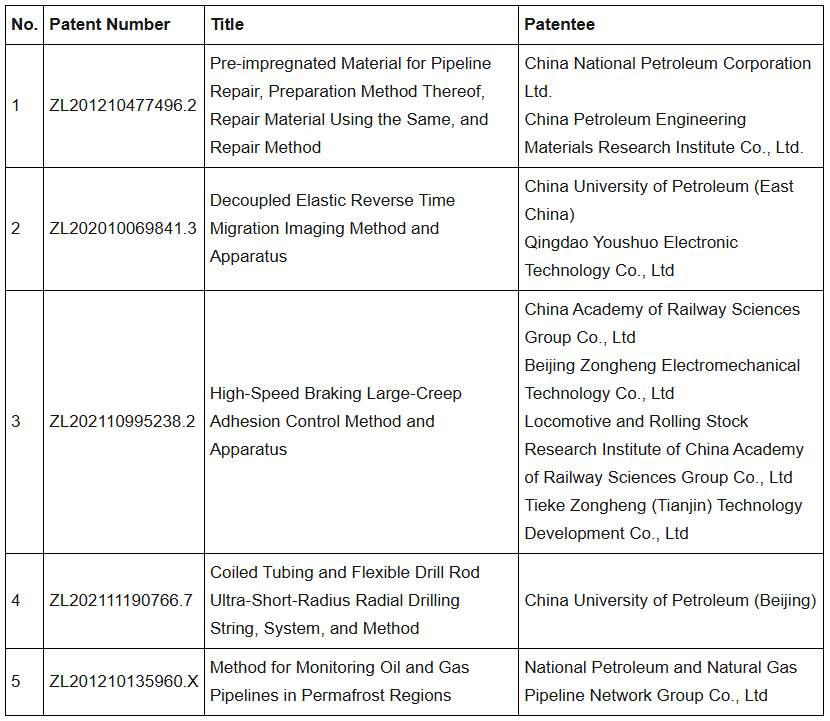
For forty years, Sanyou has maintained rigorous quality control over the drafting and prosecution process of every patent case, helping clients unlock the value of technological innovation. With solid professional expertise, Sanyou will continue to assist more clients in earning recognition in the intellectual property field, and we extend our sincere congratulations to all the clients that have been successfully shortlisted!
2. The New Trademark Law Comprehensively Curbing Trademark Speculation, Returning to the Legislative Purpose of “Trademarks Intended for Use”
The newly amended 2026 Trademark Law will officially take effect on January 1, 2027. At the heart of this revision is a fundamental reshaping of the underlying logic of trademark registration and protection, refocusing on the legislative purpose that trademarks are meant to be used. Strong measures have been introduced to crack down on speculative activities such as trademark hoarding and bad-faith pre-emptive registrations, while trademark administration has been significantly strengthened, bringing profound implications for brand portfolio planning and protection strategies both domestically and internationally. The new law explicitly stipulates:
Trademark applications lacking intent to use and clearly exceeding normal business needs shall not be approved. Those causing adverse effects may face fines of up to RMB 100,000, which is expected to curb hoarding, pre-emptive registrations, and bad-faith filings at the source. Companies are advised to align their trademark filing strategies with actual business needs and avoid blindly broadening filing classes of goods and services.
The exit mechanism for idle registered trademarks has been upgraded. In addition to the existing procedure allowing any party to request for revocation of a trademark that has not been used for three consecutive years without a justifiable reason, the trademark authorities may now proactively clear up idle trademarks ex officio. Moreover, a new maximum fine of RMB 250,000 has been introduced for the misleading use of a registered trademark (commonly known as “manipulative trademarks”), and failure to rectify such use may result in revocation. It is recommended that enterprises promptly put into use or voluntarily clear up registered trademarks for which they have no usage plan, standardize their trademark use, and maintain complete evidence of trademark use across all channels, both online and offline.
The trademark examination and granting process has been significantly accelerated, and the opposition period following preliminary approval has been shortened from 3 months to 2 months. The window for brand monitoring and filing oppositions has thus been compressed. Companies may work with professional service agencies to establish a regular trademark watch mechanism and optimize internal decision-making processes to respond efficiently to these procedural changes.
Furthermore, it has been clarified that unregistered well-known trademarks may enjoy cross-class protection, and a domestic well-known status recognition channel has been established to support Chinese brands seeking to enforce their rights overseas. The new law also adds “dynamic marks” as registrable elements, meeting the visual protection needs of short-video and digital brands.
3. 2025 Antitrust Enforcement Data Released: Regulatory Risks in Key Industries Merit Attention
China’s State Administration for Market Regulation (SAMR) recently published the Annual Report on Anti-Monopoly Law Enforcement in China (2025). According to the report, a total of 20 monopoly cases were opened and 22 were concluded in 2025, with total fines and confiscations amounting to RMB 653 million. Monopoly agreement cases were a key enforcement focus, with 11 cases investigated and penalized, leading to fines of approximately RMB 606 million. These cases were predominantly concentrated in sectors such as pharmaceuticals, driving schools, motor vehicle inspection, building materials, and telecommunications. Enforcement in the pharmaceutical sector continued to intensify, with related cases resulting in confiscations totaling RMB 585 million, and for the first time, multi-level liability was imposed on the enterprises, organizers, and responsible individuals involved.
In the area of merger control, the efficiency of antitrust review continued to improve. In 2025, a total of 706 merger cases were concluded, marking an increase of 9.8 year-on-year, of which 687 were cleared unconditionally. The average case-conclusion time was 25.39 days, and approximately 86 of cases were concluded during the preliminary review phase. In parallel, four cases of illegal concentration of undertakings were investigated and penalized, with fines totaling RMB 6.95 million.
In 2025, market regulation authorities at all levels reviewed nearly 60,000 policy measures and put forward 12,300 opinions for revision or adjustment. A total of 96 investigations into administrative monopoly practices were launched and 75 were concluded, representing year-on-year increases of 34 and 32, respectively.
From a corporate compliance perspective, the report sends a clear signal: key industries such as pharmaceuticals, internet platforms, public utilities, and new energy will remain at the forefront of antitrust oversight. Enterprises should further strengthen their antitrust risk assessments, enhance their competition compliance management systems, and take steps to mitigate regulatory risks when engaging in investment, mergers and acquisitions, intellectual property licensing, and commercial cooperation.
4. Specification for Intellectual Property Pledge Financing Services (Draft for Comments) Released to Promote Standardized Development of IP Financial Services
The Beijing Patent Attorneys Association has recently released the draft group standard Specification for Intellectual Property Pledge Financing Services (T/BJPAA 0003-2026) for public comment. The standard aims to further standardize the IP pledge financing service process, facilitate the realization of IP value, and provide standardized operational guidance for technology and cultural-innovation enterprises.
This standard is formulated in accordance with regulations and national standards such as the Civil Code and the Patent Evaluation Guidelines, and is applicable to financial institutions, IP agencies, and appraisal firms. It covers patents, trademarks, software copyrights, integrated circuit layout designs, and new plant varieties, while data IP rights may be used as a reference.
The standard establishes a complete closed-loop process covering application, due diligence, risk control, valuation, pledge registration, post-loan management, and collateral disposal, accompanied by standardized process diagrams and due diligence templates to unify operational norms at each stage.
First, it clarifies the rights and responsibilities of all parties: enterprises must ensure the authenticity and completeness of their IP materials; financial institutions shall implement risk control measures throughout the entire process and dispose of pledged assets in case of default; service providers and appraisal agencies shall conduct due diligence and valuation independently and objectively. The pledged subject matter must have clear ownership and a remaining protection period longer than the loan term. Patents belonging to the same family and similar trademarks must be pledged together.
Second, it standardizes the core business processes: due diligence covers eight dimensions, including ownership, technological maturity, market revenue, and business operations. Value assessment uniformly adopts the cost, income, or market approach, and appraisal reports must include detailed mandatory disclosures. Pledge registration is handled through two channels—the China National Intellectual Property Administration and the National Copyright Administration—with the essential terms of the pledge contract clearly defined.
Third, it establishes a full-cycle risk control and disposal mechanism: after the loan is granted, loan funds, enterprise operations, and the legal status of the IP are monitored simultaneously, with tiered risk warnings put in place. If the enterprise defaults, its operations deteriorate, or it becomes involved in major litigation, financial institutions may dispose of the pledged IP through four methods: reverse licensing, bundled auction, debt-to-equity conversion, and third-party operational conversion. A fixed priority order for distributing the disposal proceeds is also established.
Implementation of this standard will strengthen risk controls for financial institutions, standardize industry practices, and reduce financing costs for innovative enterprises. The current document is still at the public comment stage. Once officially issued, it will be promoted and implemented through training, pilot programs, and policy coordination.
